
Balancing Privacy and Collaboration in Modern Office Design
Balancing privacy and collaboration in modern office design means creating a workspace where employees can work quietly when needed and also communicate and collaborate easily with others. It focuses on designing offices that support both focused individual work and teamwork without disturbing productivity. Modern businesses need this balance to improve employee satisfaction, efficiency, and overall performance.
Why Modern Offices Need Privacy and Collaboration
Workplaces have changed a lot in recent years. Earlier, offices were either fully open or completely closed with cabins. Today, companies understand that employees perform different types of work throughout the day. Sometimes they need silence and concentration. At other times, they need open communication and teamwork.
If an office has too much openness, employees may feel distracted and stressed. On the other hand, if the office is too closed, communication becomes slow and teamwork suffers. That is why modern office design focuses on balancing privacy and collaboration.
Organizations that achieve this balance often see better productivity, improved employee morale, and stronger team relationships. Employees feel more comfortable when they have the right space for the right task.
Understanding the Need for Privacy in Office Design
Privacy in the workplace is not only about personal space. It is also about reducing noise, avoiding interruptions, and allowing employees to focus deeply on their work.
Many employees perform tasks that require concentration, such as writing reports, coding, financial analysis, or strategic planning. In noisy open offices, these tasks become difficult. Constant interruptions can reduce efficiency and increase mistakes.
Privacy in modern office design usually includes:
- Quiet zones for focused work
- Phone booths for private calls
- Small enclosed rooms
- Acoustic panels to reduce noise
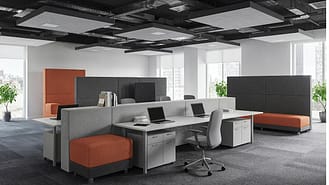
- Workstations with visual barriers
Providing privacy does not mean isolating employees. It means giving them the option to work without disturbance when needed.
The Role of Collaboration in Modern Workspaces
Collaboration is equally important in today’s business environment. Teams must communicate quickly, share ideas, and solve problems together. Modern companies rely heavily on teamwork, brainstorming, and quick decision-making.
An office that supports collaboration usually includes open spaces where employees can interact easily. These areas encourage creativity and faster communication.
Common collaborative elements in modern office design include:
- Open meeting areas
- Informal discussion zones
- Brainstorming rooms
- Team workstations
- Breakout spaces
When collaboration spaces are well-designed, employees feel more connected and engaged. It also reduces the time wasted in formal meeting arrangements.
Challenges in Balancing Privacy and Collaboration
Creating the perfect balance is not easy. Many companies struggle because they focus too much on one side.
Too Much Open Space
When offices are overly open:
- Noise levels increase
- Employees get distracted
- Confidential conversations become difficult
- Stress levels may rise
Too Many Closed Spaces
When offices are too enclosed:
- Communication slows down
- Team bonding becomes weaker
- Employees may feel isolated
- Innovation can decrease
The key is thoughtful planning based on how employees actually work.
Key Principles of Modern Office Design Balance
To achieve the right balance between privacy and collaboration, companies should follow certain design principles.
Activity-Based Working
Activity-based working means designing spaces according to different types of work. Instead of assigning one fixed desk, the office provides multiple zones for different tasks.
Employees can choose:
- Quiet areas for deep work
- Open areas for teamwork
- Meeting rooms for discussions
- Lounge spaces for informal talks
This flexible approach supports both privacy and collaboration naturally.
Smart Space Zoning
Zoning is one of the most effective strategies in modern office design. It involves dividing the office into different functional areas.
A well-zoned office may include:
- Focus zones
- Collaboration zones
- Social zones
- Meeting zones
- Private call areas
Proper zoning reduces conflict between noisy and quiet activities.
Acoustic Planning in Office Design
Noise is one of the biggest problems in open offices. Without proper acoustic planning, employees cannot concentrate.
Modern offices use several sound-control solutions:
- Acoustic ceiling panels
- Carpet flooring
- Sound-absorbing wall panels
- Phone pods
- White noise systems
Good acoustic design allows open collaboration areas to exist without disturbing focused work zones.
Furniture Solutions for Privacy and Collaboration
Furniture plays a major role in modern office design. The right furniture can create flexible environments without expensive construction.
For Privacy
- High-back workstations
- Desk partitions
- Enclosed pods
- Adjustable screens
These solutions provide visual and acoustic separation.
For Collaboration
- Modular seating
- Movable tables
- Open lounge furniture
- Standing meeting tables
Flexible furniture allows quick transformation of spaces based on team needs.
Technology’s Role in Modern Office Balance
Technology helps offices maintain both privacy and collaboration more effectively.
Important technology tools include:
- Video conferencing systems
- Room booking software
- Noise masking systems
- Smart lighting controls
- Collaboration displays
For example, digital room booking prevents meeting room conflicts. Noise masking systems reduce distractions in open spaces.
Technology also supports hybrid work models, where some employees work remotely while others work in the office.
Comparison: Privacy vs Collaboration Needs
Below is a helpful table that shows how privacy and collaboration requirements differ in modern offices.
| Aspect | Privacy-Focused Design | Collaboration-Focused Design |
|---|---|---|
| Main Goal | Deep focus and confidentiality | Teamwork and communication |
| Space Type | Quiet rooms, pods, cabins | Open areas, meeting zones |
| Noise Level | Very low | Moderate and controlled |
| Furniture | Enclosed desks, partitions | Modular and open seating |
| Best For | Analysts, writers, developers | Marketing, sales, creative teams |
| Design Priority | Acoustic control | Accessibility and openness |
A successful modern office includes both types of spaces in the right proportion.
Benefits of a Well-Balanced Office Design
When privacy and collaboration are properly balanced, organizations experience many advantages.
Higher Productivity
Employees can choose the right environment for their tasks. Focused work becomes faster, and teamwork becomes smoother.
Better Employee Satisfaction
Workers feel comfortable when they have control over their workspace. This improves job satisfaction and retention.
Improved Communication
Dedicated collaboration zones encourage faster discussions and better idea sharing.
Reduced Workplace Stress
Noise control and private areas reduce mental fatigue and workplace frustration.
Stronger Company Culture
Balanced offices support both independent work and team bonding, creating a healthy work culture.
Practical Tips to Achieve the Right Balance
Companies planning modern office interiors should consider these practical steps.
First, analyze how employees actually work. Conduct surveys or observe daily workflows. Every organization has different needs.
Second, avoid fully open office layouts without quiet spaces. Pure open offices often fail in the long run.
Third, invest in acoustic solutions early. Fixing noise problems later becomes expensive.
Fourth, use flexible furniture instead of permanent walls wherever possible. Flexibility keeps the office future-ready.
Fifth, create clear zoning with visual cues such as flooring changes, lighting differences, or ceiling design variations.
Finally, regularly collect employee feedback and adjust the workspace accordingly.
Future Trends in Modern Office Design
Office design continues to evolve. Future workplaces will focus even more on flexibility and employee well-being.
Key emerging trends include:
- Hybrid work-friendly layouts
- More phone booths and focus pods
- Biophilic design elements
- Smart sensor-based space usage
- Multi-purpose collaboration zones
Companies that adapt early will have a competitive advantage in attracting and retaining talent.
Conclusion
Balancing privacy and collaboration in modern office design is essential for today’s dynamic workplaces. Employees need quiet environments for deep work as well as open spaces for teamwork and communication. Organizations that carefully plan zoning, acoustics, furniture, and technology can create offices that support both needs effectively.
A well-balanced office does more than look modern. It improves productivity, enhances employee satisfaction, reduces stress, and strengthens company culture. Businesses that invest in thoughtful office design today will build stronger, more efficient teams for the future.